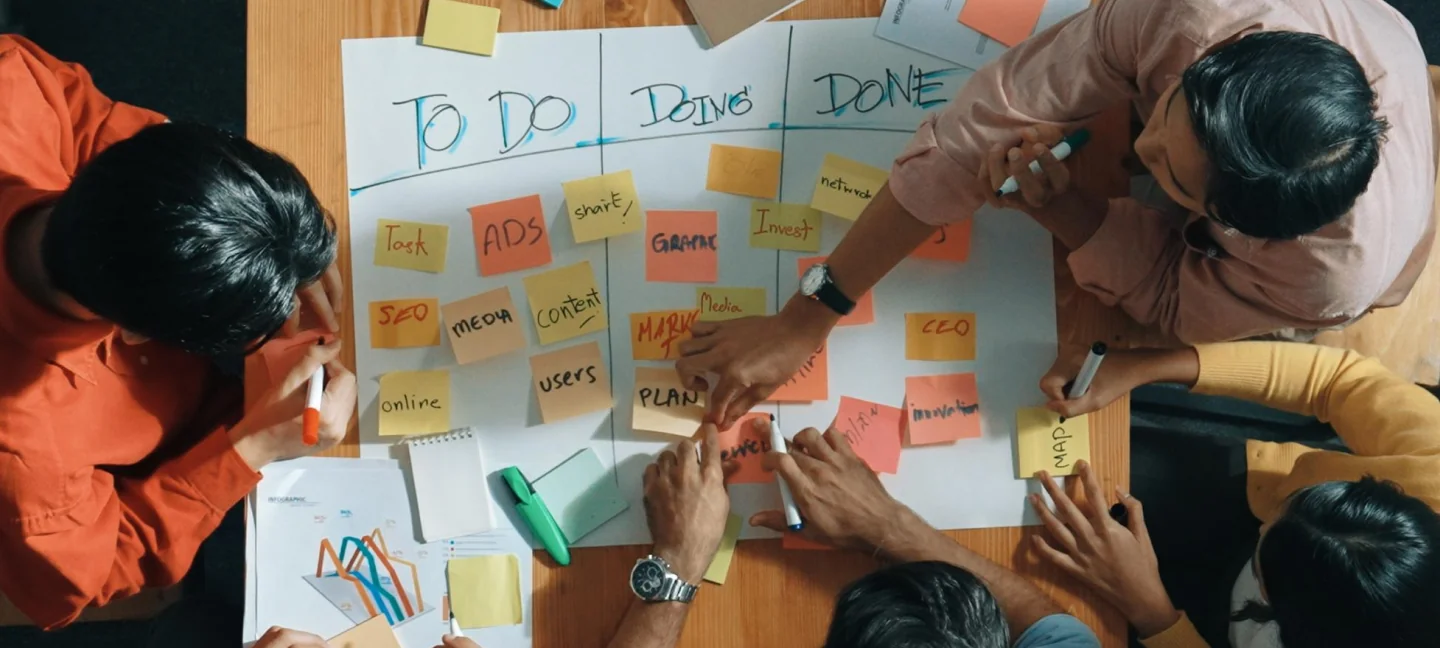
Agile development methods have grown substantially since 2001, as it introduced many new methods and practices that made the world more flexible and Agile. Many frameworks have emerged under the umbrella term of Agile such as Scaled Agile, Kanban, Scrum, Extreme Programme, DSDM, etc. These frameworks emerged when 17 people got together to form a better way for software development. These frameworks intend to fill all the drawbacks that were faced by using traditional software methodologies. Two among these frameworks are DSDM and Scrum, both of which share numerous similarities. However, both frameworks have also many differences that every Agile professional has to know. Some differences are related to terminologies used in both frameworks, and others may be based on the project’s definition of done. This article focuses on understanding DSDM and Scrum and also elaborates on the differences between the two.
What is DSDM?
Dynamic Systems Development Method (DSDM) is a type of Agile framework which came into existence in 1994. It was used for software development and was meant to be an enhancement on the Rapid Application Development (RAD). RAD is a type of software development that gives importance to iteration and rapid prototyping which is based on the feedback of the user. As the DSDM methods and practices became more popular and understandable by other industries, it went on to become a general Project Management tool from a software-specific solution. DSDM was widely adopted by industries outside the IT sector in the past few years which led to the dropping of the acronym. Some of the industries have renamed the term DSDM as “Driving Strategy, Delivering More.”
DSDM has eight principles for any type of implementation and is the key to philosophy adopted by the framework. These principles are:
DSDM addresses many common problems such as cost overruns, late delivery, or not meeting the expectations of the product being requested by building an environment that is flexible and focuses on creating and maintaining high-quality products. DSDM uses an incremental and iterative approach towards product development and also involves stakeholders during the development process. Project teams are given precise and clear roles and DSDM ensures that they are scheduled on time and focus on hitting the deadlines. Upfront design is balanced by DSDM as it gives enough flexibility to respond to any kind of change but also reduces any type of risk in the process of product creation.
Elements of the DSDM
Phases of DSDM
The company identifies projects submitted by a candidate and begins funding such that the project commitment is ensured. These issues are handled at earlier stages so that it does not create any problems in later stages.
The project life-cycle has five stages that every project has to go through to create an IS. Feasibility study and business study are the first two phases that complement each other. Later the project goes through functional model iteration and Design and builds iteration where most of the work on the project is designed and completed and later implemented in the last stage.
This phase makes sure that the system is operating efficiently and effectively. This is evaluated according to the principles of DSDM. All of the maintenance, fixes, and enhancements are done based on the principles. The iterative and incremental nature of DSDM helps the organization to view the continuing development of the product. The previous cycles or phases could be refined in DSDM as instead of finishing the entire project at once, it allows developers to return to previous steps as well.
Core techniques used in DSDM
What is Scrum Framework?
Scrum is lightweight, easy to understand, but difficult to master an Agile framework that develops products incrementally and iteratively. Scrum encourages its members to learn from the experiences and promotes methods of self-organization and continuous improvement by reflecting on their success and failures. Scrum promotes continuous learning and is instructional and informative. The Scrum framework is designed in a manner where the Scrum Team does not have to detail all the features of the product in the beginning. It believes that as the team moves ahead of the project, it discovers more features and improvements which will depend on the user and customer feedback and present market trends. Scrum responds rapidly to changes and is flexible for any type of change requested by the customer. Product Increments in Scrum are delivered by timeboxed iterations called Sprints which last about a maximum of 30 days. These are short cycles that allow the team to learn from their mistakes from previous Sprints and improve themselves in the next Sprint. Any organization can adopt Scrum as it does not restrict itself only to software development. Industries such as banking and finance, aerospace, food technology, educational institutions, construction and architectural businesses, and also government projects employ Scrum for their projects.
Project Management Using Scrum Framework
Scrum is an iterative and incremental approach to develop complex products. It has time-boxed durations called Sprints where the Developers create Product Increments such as User Stories. The Product Owner builds a Product Backlog which is a list of items that has to be integrated into the product. A minimum viable product is initially built by the Scrum Team and released in the market. The Scrum Team later conducts Sprint Planning meetings where Developers are assigned tasks based on the priority on the Product Backlog. The items on the Product Backlog are broken down into simple tasks and taken in the Sprint Backlog. The team plans the implementation of the tasks and decides a time duration for the Sprint to be completed. The most common interval of a Sprint is two weeks. A brief meeting is conducted every day which is called the Daily Standup where the team members discuss what was accomplished yesterday, what they intend to accomplish today, and if they are facing any issues during their work. This meeting helps the Scrum Master and the Product Manager assess the progress of the team and helps the team to be motivated and focused.
When a particular Sprint is completed, the Product Owner, the Scrum Master, and the stakeholders, along with the Developers gather for the Sprint Review meeting. Here, the Developers demonstrate the Product Increment that they promised at the Sprint Planning and take down the feedback of the Stakeholders. Feedbacks are an important part of the development process as it gives a clear picture of what the user is expecting from the product. There are two types of feedback called internal and external feedback. Internal feedback is given by the team members and other company members to developers, and external feedback is given by the user or customer to the developers and the Scrum Team. Another meeting where the stakeholders are not included, which is called the Sprint retrospective is also conducted where the team reflects the mistakes done in the previous Sprint and finds out ways where they can improve in the following Sprint. Scrum team members are self-organizing and have a sense of accountability and ownership of the product. After every Sprint, the product is updated with the fixes and a new version of the product is released to the market. This cycle is repeated till the product is fully developed.
DSDM Vs Scrum Difference
Agile DSDM and Scrum share numerous similarities as both employ iterative and incremental approaches for product development. In DSDM, the work is divided into “engineering activity” whereas work in Scrum is termed as the development phase. Also, in DSDM, the output is called the “emerging solution” whereas in Scrum it is called “potentially releasable increment.” Both DSDM and Scrum work towards a finished project by adhering to tight deadlines. But the main difference between them is that Scrum has a concept of Definition of Done (DoD) where a Product Increment progresses towards implementation only if it satisfies the criteria of DoD.
In contrast, the DSDM does not have any specific point where the project could be defined as done and the DoD is agreed upon. This forms one of the most important differences between DSDM vs Scrum. However, it is significant to note that in DSDM, there is a phase that defines when the work is agreed upon which is called the foundation phase of the project. This happens in the early stage of development where there are only assumptions about the design and features of the product. In this early stage of the planning process, team leaders avoid Big Design Up-Front, which is more of a feature of Waterfall Methodologies and does not correspond to Agile.
Conclusion
Within the Agile umbrella, there are various frameworks such as Scrum, Scaled-Agile, Lean-Agile, Extreme Programme, etc. all of which follow the values and principles listed in the Agile manifesto. There are possibilities that few of the frameworks share similarities among each other, however, no two frameworks could be exactly alike. Both DSDM and Scrum have their pros and cons and have many similarities between each other. Likewise, both frameworks can be adapted based on the needs of the organization. The companies should select Agile frameworks based on the practices and methods which will support them in achieving their long-term goals. Implementing frameworks after analyzing their features and adhering to their principles is the key to be successful in the Agile industry.

Company
Quick Links
Corporate Solution
Connect with us


We Accept





Get our weekly Newsletter
Contact us based on your location
Popular Courses

 Australia
© 2011-2026, Training Provider-






 USA
 India
 UK